The Future of O.C.D.

Everytime that I hear someone say, “I am SO ready for 2020 to be over”, I quickly reply with, “Well you don’t know what 2021 has in store for us yet!” And while our future is uncertain in regards to what victories and challenges we will face in the new year, we can be certain of a few things.

Today Is The Most Important Day
As special and memorable as the past is, and as exciting and hopeful as the future is, today deserves the most of our attention out of the three. We can’t change or live in the past, and we can’t control or predict the future. But with today, we can utilize what we’ve learned from the past, and form patterns and habits that set us up for a healthy future.

There Will Be Challenges
As long as their is blood pumping through our veins, and air circulating through our lungs, we are at war with the flesh. Whether sickness, death, temptation, disappointment, or trials, we are certain to endure hardship throughout 2021. Knowing this certainty, I find it of utmost importance to spend the remainder of 2020 preparing the mind and spirit for another year of endurance. Just as a military leader prepares their troops for the battle ahead, God gives us resources through His word, prayer, and community that help us prepare for the battle field ahead of us.

Good Can Come From Any Situation
If you’re like me, then you instantly thought of a few situations that surely are incapable of producing anything good. Examples that crossed my mind: A sudden and tragic loss of a child. Watching a loved one suffer and die from cancer. Suffering through a brutal war that leaves one left with PTSD. I could keep going. And though all of these situations are tragic and deserve appropriate grief, I truly do still believe that good can come from any situation. The key is to look for the good in the not so good experiences of life. Not every situation will feel good. But every situation can produce good, even if the good is simply experiencing growth, deepening of community, or an important lesson that is learned.

Let me switch gears for just a moment by saying this,

I DON’T KNOW WHAT 2021 HOLDS FOR MY O.C.D.. BUT I CAN BE CERTAIN OF A FEW THINGS:

Today Is The Most Important Day
I can’t beat myself up over the past struggles of my O.C.D., just as I can’t sit in worry about what a future of living with O.C.D. looks like. What I can do, however, is tap into the strength, self-control, community, and resources that God supplies for me this very day…while trusting that tomorrow will provide a new stream of resources and strength. He always manages to provide just what I need for today. And that’s why I can praise Him for my past victories, learn from past mistakes, and have Faith as I walk into the unknowns of the future.

There Will Be Challenges
The only certainty of 2021, is knowing that I will still have O.C.D.. There will still be challenges and struggles. How I choose to utilize my time right now can greatly determine what shape I will be in mentally, emotionally, physically, and spiritually during those inevitable struggles. I choose to be thankful for the certainty of hardship because at least I can prepare for it now.

Good Can Come From Any Situation
It has taken me several decades to find “the good” in living with a mental disorder like O.C.D. and irrational phobias that consume my mind and day to day life. But like I explained earlier, just because a situation or experience like O.C.D. doesn’t feel good, that doesn’t mean that the experience cannot produce good. Living with and through O.C.D. has given me far more compassion and empathy for others who have disabilities and disorders. Suffering through O.C.D. has created a deeper hope and longing for heaven in me. Fighting through so many years of isolated misery from O.C.D. has taught me the importance and definition of community.

"Therefore, stop worrying about tomorrow, 
because tomorrow will worry about itself. 
Each day has enough trouble of its own."
Matthew 6:34

Instead of worrying about the uncertainties of a future filled with O.C.D., I choose to embrace what IS certain. Today is the most important day. That’s certain. I will face challenges in the future. That is certain. Good truly can come from any challenge I endure. That is certain.

What certainties will you choose to meditate on in preparation for a new year?
OCD-Created On Purpose

Photo by Pixabay on Pexels.com

You might have noticed a subtle, yet significant change on my website. But because I’m assuming most of you didn’t catch the change at all, I’ll go ahead and give you the spoiler alert: I changed the subject of this blog from “Living With OCD”, to “Created on Purpose”.

Over the last few months, I have been meditating and praying over the direction of this blog leading into 2021, especially in combination with my newly launched Youtube channel. How could I possibly discuss living with OCD in a way that relates to everyone? And then, it hit me!

The core of everything I have shared up to this point, is founded on one passionate message: Despite our brokenness, despite our limitations, despite our darkness, we were created on purpose and for a purpose. We are our best selves when we are living with purpose. I believe this with everything in me.

This change represents broadening my message to more than just individuals who live with a mental disorder like OCD. I want to speak and share in ways that anyone can relate to.

What will this look like in 2021?

1-Addressing Broader Topics.
I want to go beyond conversations about OCD and cover topics that anyone can relate to.

2-Fostering Deeper Conversations.
My hope is to tackle those questions or thoughts that most try to avoid and dance around, while still occasionally incorporating my own personal journey with OCD.

3-Creating Intentional Content.
I truly want to create a more unified platform that has a tangible direction and message.

I want to thank each of you who have supported this journey in 2020. But honestly, I feel like I am just getting started as I enter the new year with a fresh vision and more intentional content. I hope you’ll continue to follow me into these new and deeper discussions. I can only do so much in this world. But together? Man, we can literally change the world around us.

Will you join me?

OCD “Why Me?”

Surely I am not the only one who has asked the question, “Why me?”, when facing hardship?

When it comes to OCD, there are so many times I have begged God to take this away from me. I look around at everyone who doesn’t have OCD and wish so deeply I could experience the things they experience without a care in the world.

This video goes a bit deeper into this questions. I hope this change of perspective can help you as much as it is helping me. Make sure to like the video, subscribe to my channel, and pass the message along if you find anything that is said to be helpful or encouraging.

OCD Awareness Week

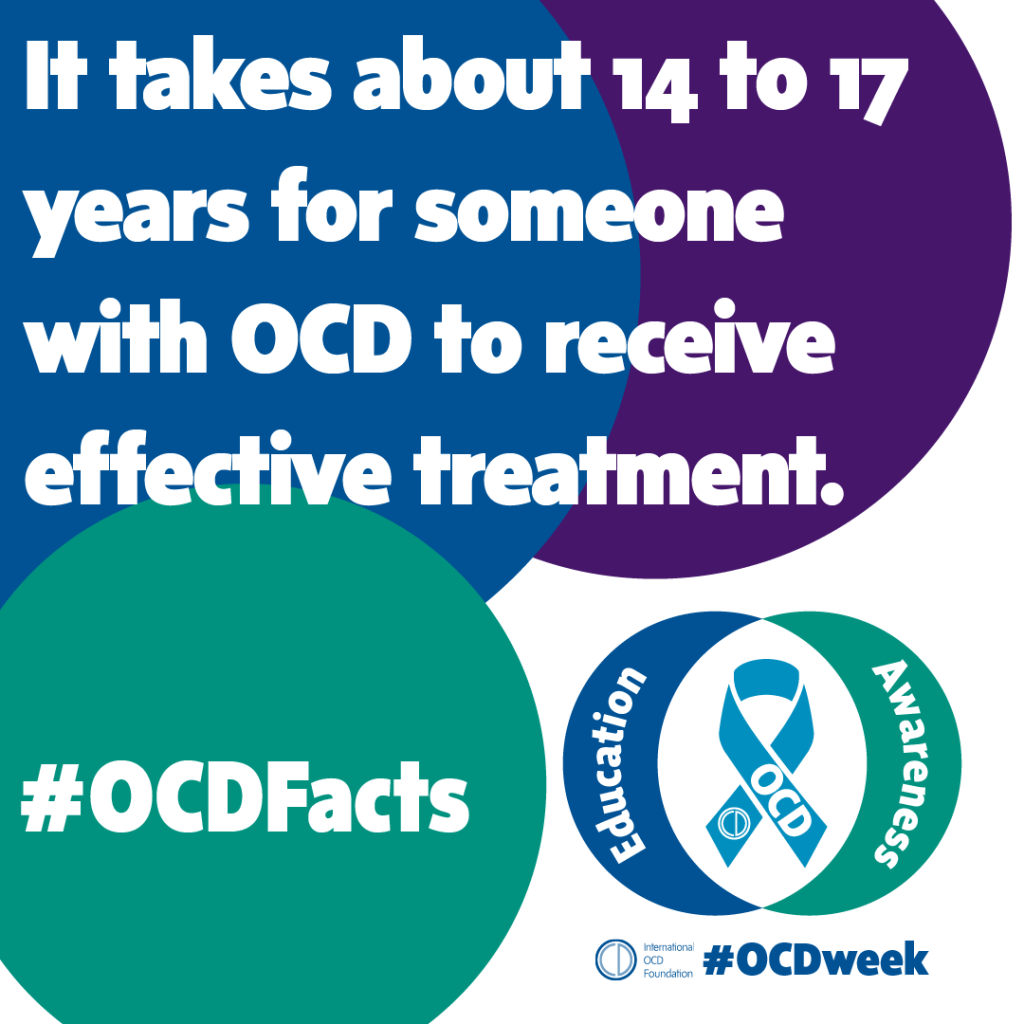
Can you imagine going 17 years through life, not knowing why you struggle with your struggles with certain things that others don’t struggle with?

The term “OCD” was loosely thrown around at me in counseling during college, as a potential cause of what I was miserably enduring for many years. Other terms that I heard growing up to describe my challenges were, “learning disorder”, “anxiety”, “depression”, “eating disorder”, “gay”, “too picky”, “overwhelming”, “too critical”, and others I’m sure.

Can you imagine being told these things, while knowing in your heart something just wasn’t right?

I knew I didn’t have a learning disorder. I was a fantastic student and graduated from nursing school with great grades!

I knew I didn’t have chronic anxiety or depression. At my core I was passionate, productive, social and full of joy.

I knew I didn’t have an eating disorder. I loved food, enjoyed being healthy, and wasn’t trying to lose weight.

I knew I wasn’t gay. But I couldn’t understand my irrational fears, obsessive and intrusive thoughts, or my obsession over fear of the body when thinking about intimacy.

I knew I wasn’t intentionally being stubborn or picky about the things I was afraid of or uncomfortable with like textures, colors, patterns, or sounds.

I knew that I was overwhelming, but I didn’t want to be.

I knew that I was over critical, but I didn’t enjoy it nor did I want to be.

17 years is a LONG time to wrestle with these challenges. 17 years is a LONG time to feel so misunderstood. 17 years is a LONG time to not have an explanation for what you are struggling with. 17 years is a LONG time to feel isolated.

My opinion, is that this gap–the time it takes a person to be properly diagnosed and treated for OCD–is one of the greatest causes of suicide rates within the OCD community. As mentioned before, we are 10 times more likely to commit suicide than those who do not suffer from this disorder. When was the turning point in my own journey? The moment I learned that my struggles had a name, an explanation, and a treatment plan! That moment was the moment suicide stopped being a continual thought, and HOPE began to fuel every day.

I am still on my healing journey. And honestly, I probably always will be this side of heaven. But I believe that the more I (we) communicate openly about these things, raise awareness, and shorten this gap in the OCD community, the more momentum, power, and HOPE will be injected into our community.

Help me spread this message by following and sharing my social media platforms.

Announcement!!

Photo by Andrea Piacquadio on Pexels.com

Did you know that the 2nd week of October is O.C.D. awareness week? Did you know that my birthday kicks off the beginning of that week? Did you know that I have O.C.D.? Ok, too far….of course you did! That’s been the topic of this entire blog site.

To support the O.C.D. community, and others who struggle with mental health balance, I will be posting personalized videos throughout the month of October. These videos will be vulnerable in an effort to help those still living isolated from their disorder, step into the light of healthy communication.

For more information on special events, community awareness walks, and virtual education, check out the O.C.D. awareness week website here.

I hope you’ll help me in spreading the word, showing support, and raising awareness for this amazing cause. I truly believe that together we can drastically help reduce suicide cases that are related to mental disorders like O.C.D.. It starts with me. It starts with you.

Will you join me in this fight for mental health?

Check these out:
O.C.D. Week Calendar
Virtual Walk-a-Thon
Virtual Seminars
Make a Donation

Being a Healthy Friend Despite O.C.D.

Photo by ROMAN ODINTSOV on Pexels.com

Have you ever seen the movie Pitch Perfect? One of my favorite scenes in the movie, is when Chloe starts to blame everything on her “nodes”. At one point she messes up a singing part, and as she attempts to explain why, Fat Amy interrupts and says, “We KNOW, we KNOW! It’s your nodes!”

Living with a clinical condition like O.C.D. can tempt a person to blame every mistake and unhealthy behavior on the clinical condition itself. But let me be clear, though we may not be able to control having a clinical condition, we do have control over how it manifests in us at times. We shouldn’t be the Chloe of a friendship, and blame poor effort on our condition. Our friends, family, and loved ones deserve better. They are not our punching bags left to take the hits of our obsessive, compulsive, and disordered behaviors.

I believe that putting the following steps into action within our relationships, will lead those of us with O.C.D. towards being healthier friends, family members, and loved ones for those who walk beside us in our struggles.

Seek Wise Counsel
I cannot recommend professional and/or sound counsel enough. Whether through a licensed counseling office, or a trusted mentor, having an unbiased outside party to share our O.C.D. struggles with, is crucial. These conversations allow us to not only communicate our struggles in detail, but also to receive advice, discipline, perspective, and understanding regarding our behaviors and concerns as they relate to O.C.D.. Counseling may or may not lead to further intervention like medication, or cognitive/behavioral therapy. These tools for me personally have made all the difference when it comes to what type of friend I am to others despite having O.C.D..

Communicate Clearly
One of the most effective steps I’ve taken in my own relationships, is that of communicating openly about my O.C.D. triggers, the effects they have on me, and when I am experiencing a spiral. This clear communication helps those I love not only understand what I’m going through internally or externally, but also provides better understanding to what I need in those moments. Healthy communication can literally be the difference between lashing out or treating our loved ones poorly because of what we are internalizing, and receiving loving support to help us make healthy choices and demonstrate healthy behaviors. This action has also, at times, allowed my friends or family members to call out my unhealthy behaviors like obsessive communication, neediness, etc, while going deeper and asking how I am doing with O.C.D.. Building a community who truly understands what you are enduring internally or externally, is the quickest way to promote healthy balance in relationships.

Set Boundaries
This is possibly the most difficult step. At least for me. I have a tendency to expend myself for others, even to the point of self destruction. But what I’ve learned, is that in doing that, I end up hurting others in the long run because of what I suffer through internally and how that manifests in my relationships over time. There are times in a friendship and relationship, that because of O.C.D., we must advocate for ourselves and set boundaries. Boundaries sound like this:

“Hey, I really want you to feel heard, and I will do my best to support you however I am able, but I cannot talk about this particular subject as it’s a trigger topic for my O.C.D..”
“I don’t want to be a party pooper, but this movie is going to have major impacts on my O.C.D. later on, can we watch something else?”
“I think we should have this conversation in person, and really soon. I feel tempted to obsess over this until I feel it’s resolved, and I don’t think texting will show our true tone of voice or care for one another. I don’t want to say things I don’t mean. And I also will have trouble feeling at peace until this is resolved or talked about.”
“I wish I could stay up with y’all, but night time and a lack of sleep really effects my ability to manage my O.C.D., so I’m going to have to head to bed.”

It may feel awkward, excessive, and even a bit cold at times. But I promise you setting boundaries like these will make a world of difference in the type of friend you are able to be for others around you.

Own Up to Unhealthy Behaviors
Let’s face it. There will be times when O.C.D. gets the best of us. If you’re like me, living with O.C.D. is like running a mental and behavioral marathon every…single…day. And though I strive to be healthy, self controlled, and productive each day, there are days when I fail miserably. And just like any off days that we are all prone to having, there will be times when we need to own up to our poor decisions, words, and behaviors. This might look like,

“I want to apologize for how detached I was earlier. I was feeling ____ because of my O.C.D.. I should have communicated that and been more present in the moment, and I’m sorry. I just wasn’t processing my thoughts or fears well and I let it affect our time together.”
“You were so patient with me earlier when I was struggling to process what was happening. I know walking beside me is not always easy and I just wanted to acknowledge your effort.”
“I am sorry that I have been extra obsessive lately. I’m not sure if I’m just needing more reassurance than usual, or if I’m trying to process thoughts and fears. Either way, I will try to have better boundaries so I’m not exhaustive for you.”

It’s okay to have certain needs and expectations. BUT, we must learn to balance these to prevent unhealthy needy, obsessive, or controlling behaviors. We shouldn’t use our friends, family, or loved ones as an emotional dumping ground when we are struggling to have self control.

We might be clinically obsessive, compulsive, and disordered, but we can still have self control and accountability in our relationships.

-Me

It has taken me decades to understand these things in my own friendships and relationships. Heck, I’m still learning how to be a healthy friend, especially when it comes to living with O.C.D.! But I can tell you first hand, the effort pays off and the benefits of a healthy approach to relationship with others is so rewarding. Next week I will discuss practical ways to be a healthy and supportive friend to those of us who live with O.C.D..

If you find this information to be helpful, I hope you’ll follow this blog, as well as share it with others you feel would benefit as well. I believe that productive communication is key to fostering a better environment for mental health. It starts with me. It starts with you. Let’s change misconceptions together, one conversation at a time!

Friendship and O.C.D. Part 1

Photo by Helena Lopes on Pexels.com

In the 1992 Olympic 400m race, Olympic runner Derek Redmond experienced a major injury right in the middle of his race. With a snapped hamstring, and no hope of winning 1st place, or even placing for that matter, his main determination became to at least finish the race.

As you watch the video of him hobbling towards the finish line, so far behind everyone who had already finished the race, you can see the pain on his face. But just when he thought he had to endure the painful finish alone, his dad burst onto the track-breaking all the rules-to help carry his son the remainder of the way.

There are three things that strike me in this video.

The first? How Derek tries with all his might to stay strong, as he limps in pain toward the finish line, yet the moment he turns to see his father wrapping around him, he breaks down and begins sobbing. It wasn’t until he felt that support from someone he knew truly loved him, that he felt comfortable enough to release all the emotional and physical pain that he was trying so hard to push through alone.

The second? How Derek’s father broke every rule in order to reach his son. The Olympic security tried to get him off the track, but he was relentless. He knew his son would reach the finish line one way or the other. But he refused to watch his son suffer alone, even if it meant breaking the rules to walk alongside of Derek and carry some of the burden for him.

The third? How not one single runner seemed to care about his injury. I mean, I guess I get it. They trained for four years for that one moment. Stopping to help Derek would be a huge inconvenience, possibly detour them if not derail them from their mission, as well as put their wants completely to the side.

I can’t help but relate each of these to the process of finding true, intimate community while living with a disorder like O.C.D.. For so many years, decades actually, I tried with all of my own strength to run through the pain. I watched as so many people who I thought were running beside me, continued on their way, seemingly clueless of the pain I was in. But then, true community began to surround me. And the moment I felt their presence, I released the weight that for so long I suffered through alone.

The truth is, we were not created to walk through life, especially through hardship, alone. God Himself has intimate community with Jesus and the Holy Spirit. How much more so do we, people of the flesh, need community to thrive?

“Woe to him who is alone when he falls”

Ecclesiastes 4:10

Though it is tough to admit, there have been points in my life when I experienced such intense depression and anxiety because of my O.C.D., that taking my own life did become a temptation. Especially when placed on medication that ended up harming my mental state even further.

Through that experience, I am blown away and heart broken at how easily we can convince ourselves that we truly are alone in times of distress. “No one will understand.” “No one has time for me.” “No one cares enough about me.” “I couldn’t possibly trust anyone with this.” “No one can help me.” We feed ourselves with these lies, convincing ourselves that there is no safe place for us to turn…that we must endure alone.

But what fascinates me, is that the one thing we try to avoid most, is the very tool God provides for us to get unstuck from that mental spiral. That one thing?

Healthy Community.

When true community entered my life, willing to break all the rules in order to wrap around me, I knew that I was going to finish the race I started. In my experience, the difference between a solid, healthy community and a life of isolated loneliness, can literally be a matter of life or death. Which is why I am so passionate about discussing this topic of friendship, especially in regards to living with a mental disorder like O.C.D..

For the next several weeks, I want to dive deep into community. Why do we tend to run from it? What does it take to be a healthy friend to others, especially while living with a disorder like O.C.D..? How can we become healthy friends to those who are in seasons of mental, emotional, physical, or spiritual distress?

I look forward to these discussions with you, as friendship and community truly are passion topics of mine. And soon, I hope they will be for you too!

Romance and O.C.D. Part 3

Photo by Jasmine Carter on Pexels.com

Naturally I have inherited quite a few traits from my mother.

We both love crafting. We both are perfectionists who love to clean. We both explosively sneeze. We both have tiny  noses that barely keep our sunglasses on our faces. And we both have a gap in our top front teeth. But there is one trait of my mother’s that I most definitely did NOT inherit—the fearless love of riding huge roller coasters.

I’ll never forget when the Titan opened at Six Flags over Texas in 2001 while I was in middle school. There was so much hype and publicity about this roller coaster, with its 255 foot drop that would send you plummeting down at 85 miles per hour.

I decided to take one of my best friends with our family to check out this beast. Up to that point, I had only heard stories and facts about this new coaster. And I was so ready for it! The whole ride to the amusement park I spoke boldness and excitement about conquering this feat! Of course I felt a few nerves, but mostly just excitement.

Until we pulled in the parking lot next to the new ride, that is. As we stepped out of the car and looked up at the towering hill, and the steep plummeting drop, I begin trembling in fear. All of a sudden, every ounce of excitement and confidence in me was replaced with terror and a desire to run away. As we got closer and closer to the front of the line, the “clink, clink, clink” sound of the roller coaster climbing the massive and steep hill, followed by screaming victims, became too much for me! It felt like a horror movie! And I just couldn’t take the overwhelming fear.

So what did I do? I chickened out and peaced out, leaving my friend solo! And guess who stepped in to save the day? My mom! Not only did she get on that ride with my friend, but also road first cart, hands in the air, and conquered that beast like it was nothing! Hearing their excitement as they returned from the ride did not seem fair! How were they not paralyzed in fear like I was? I mean they saw the same site, they heard the same sounds, yet they went for it! It just did not seem fair.

Oh how this experience perfectly relates to approaching the topic of sex while living with O.C.D.. As mentioned in my two previous posts, the effects of accessible porn that were blasted at my generation as children have had major negative impacts on us in different ways. But for someone like me, who lives with a mental disorder that traps images on repeat in the mind, creates irrational and obsessive fears/thoughts? Well, it’s much like the experience of the roller coaster. Let me break down the process to help those who do not have O.C.D. understand the impact this has had.

Phase 1: The Blissful Excitement of the Unknown
Remember how excited, courageous, and confident I was to ride the new roller coaster, after hearing about how adventurous and fun it was? Well, when I first heard about dating, kissing, marriage, and intimacy, I was pretty excited and curious. In my innocence of the unknown, I was blissfully willing to approach this area of life. And I was boy, CRAZY! I loved having “boyfriends”. I loved kissing those cute faces (sorry mom!). And I loved holding hands during the couples skating songs at the skating rink.


Phase 2: The Shock Factor
The moment I stood at the bottom of the Titan in person, seeing it’s intimidating appearance towering over me, was equivalent to the moment that intense pornographic videos popped up on my screen as a child. All of that excitement, confidence, and adventurous spirit I had towards boys, dating, and one day marriage/intimacy, was replaced and gripped with overwhelming fear and refusal to participate. Images of such corrupt videos (if I knew I didn’t have young readers, I would explain), and disturbing images seared in my mind. I was shocked. I was disgusted. I became so overtaken by fear.

Phase 3: Getting Out of the Line
The older I got, and the closer I became to the age of marriage and idea of intimacy, the more overwhelmed I became. Further destructive experiences entered my life: Boys trying to take advantage of me, or flat out dumping me harshly when I would strive to remain pure, seeing men of faith get sucked into the trap and ruin their marriages with porn addictions and affairs, hearing stories of my friends being raped or mishandled, hearing Godly married friends discuss their struggling sex life and frustrations with their husbands/wives, etc. All of it was like the horrific sound of the “clink, clink, clink” of the roller coaster climbing the hill. So what did I do? I bailed. I got out of line. I decided in my heart that marriage and intimacy just weren’t for me.

Phase 4: Stuck in Isolation
despite the fact that so many in my generation were also impacted by pornography and negative sexual experiences, they continued in the line towards marriage and intimacy. There I was, left behind, unwilling to participate in it all, watching them conquer the challenges while running to me after in pure excitement and joy. How? They saw the same disturbing images and videos as me! They went through far more negative experiences personally, than I’d ever been through. Yet they were able to move forward and find the enjoyment in the intended experience of dating, marriage, and intimacy despite the challenges.

But not me. I remained stuck out of the line, looking on from a distance in loneliness, confusion, fear, and frustration. Were they not nervous? Were they not scarred? Were they not afraid? Were they not fed up and overwhelmed? And if so, how could they possibly move forward? So I just kept quiet, alone, and afraid.  With so many images trapped on repeat, stories replaying in my head, and obsessive, irrational fear controlling all parts of me.

I don’t know about you, but I do not want the journey to end with any of us stuck in Phase 4. No one deserves to be trapped in misery, loneliness, or a mind overtaken by fear and irrational/toxic thinking. I hope you’ll join me next week as I discuss what healing looks like for those of us who have found ourselves deeply affected by the shift we have experienced in our culture.
_______________________________________________________

“Do not be conformed to this world, but be
transformed by the renewal of your mind.”
Romans 12:2
_______________________________________________________

Romance and O.C.D. Part 2

Photo by Trinity Kubassek on Pexels.com

“If it ain’t broken, don’t fix it!”

How many of you have heard that saying from a parent or grandparent in your life time?

I for one heard this saying often while growing up, mostly because I have a natural tendency to want to fix things, even if they don’t need fixing. I believe this saying to be somewhat useful (though of course one could argue “well what if it can be improved?”).

I also find the opposite of the saying to be of value: “If it is broken, fix it!” Don’t just walk away from the broken, don’t ignore the broken, don’t feed into the broken. Fix it, if at all possible.

If you read my last post, Romance and O.C.D. Part 1, then you will know that I believe our culture completely “broke” our healthy, simple, innocent, and natural way of dating, marriage, and intimacy when it shoved accessible pornography in our faces. Did sexual addiction/porn addiction, rape, abortion, affairs, divorce, and sex trafficking exist before this cultural shift? Of course. But not at the devastatingly high rates as they do now.

I want to first acknowledge how this broken part of our culture has effected society as a whole, and then in my next blog post I want to specifically address how this cultural shift has negatively affected many of “us” with O.C.D. (no, I’m not the official O.C.D. spokesperson so I can’t speak for everyone). 

Desensitization

Have you ever looked at images of swim suites from the early 1800s? If not, you so should! You’ll get a pretty good kick out of them. Both men and women’s swim suits covered the entire body. Can you imagine how heavy those swim suites would be when wet! What fascinates me most though, is that really until the last 100-150 years, the societal expectation was that people would cover their bodies, respect each other’s physical privacy, and save intimacy for where it belongs: in the bedroom with the one you love. 

But now? Visit a public beach and you’ll find pre-teen girls walking around in thong bikinis, as well as young men walking around in tiny speedos, leaving almost nothing for the imagination. I know some may disagree with me on this, but I strongly believe this gradual change is a direct reflection of how our society has been impacted by accessible pornography. We stopped valuing the human body as a prize for the one we love, and became desensitized from the constant exposure of the human body. 

The expectation went from being modest, respectful, and private, to being fully accessible at all times to anyone, anywhere. 

False Expectations

And speaking of expectations, how can we deny the impact accessible porn has on the expectations within a relationship, and especially within marriage and intimacy. Men and women began expecting certain experiences, certain body types, and certain benefits based off of what they were seeing on paper or on a screen.  

Examples: The rise of breast and butt implants, botox, and plastic surgery over the last 50 years has directly increased as pornographic videos and images have become more accessible. Coincidence? I think not. Public stores that all can see, even innocent little children, switched from regular clothes on the displayed mannequins, to kinky lingerie and sex toys on display. Magazines in the check out line went from home decor and cooking tips, to sex tips in big, bold letters. Bridal and groom gifts went from house accessories, financial securities, and spiritual gifts, to sex toys and sex games guaranteed to “keep him/her interested”.  

These false expectations have set millions up for devastating blows to self esteem, disappointment, un-fulfillment, isolation, divorce, affairs, and more. All in efforts to achieve what was experienced from the image or video. Real life intimacy with a real person, gradually stopped competing with the instant, but short lived gratification of the fantasy world. 

Fantasy Verses Reality

And speaking of fantasy, which sounds more appealing? Being addicted to an image or video of a person who doesn’t know you, doesn’t love you, doesn’t care about you, and can’t provide any real life emotional, spiritual, mental, social, or physical support? Or being committed to a real life human that can show you compassion, forgiveness, encouragement, support, and true, unconditional love? Which sounds happier? A relationship entirely based on lust, or a relationship entirely founded upon true love?  

Our culture has been so desensitized by false expectations, that so many would rather isolate themselves to their fantasized addictions, than enjoy a real life, thriving, safe, and committed relationship with someone who deeply cares for them. How sad is that? So many men, and women, throw their real life relationships away in pursuit of these fantasized environments.

Commitment Phobia

And speaking of commitment, when did the following become the “norm”: to live in a fatherless or motherless home, to lose your virginity in middle school, to experience multiple heart breaking divorces, to “accept” that your partner is also sleeping with other people, to abort an unborn child simply so you can continue to have sex with your partner without the commitment of a child. 

The whole no commitment thing seems like a dream to so many. Yet so many in return suffer from a drastic increase in anxiety, depression, loneliness, STDs, substance abuse, and more. Still sound like a dream? What accessible porn has created, is a culture that wants instant gratification, with no strings attached, and complete numbness to the consequences of both pursuits. But what I hope our culture will wake up and realize, is that if we continue down the path of abandoning commitment, then we must be prepared to commit to the devastating heart ache and consequences that follow such a life style.

Which would you rather be committed to? 

So what now? As we begin to acknowledge the broken, and explore its devastating impact on our generation and culture, where do we even begin to pick up the pieces and fix the broken? I hope you’ll stay with me on this topic this month, so that we can find out together!